To serve wine well, get the wine serving temperature right first: 8 to 10 °C for a light white, 16 to 18 °C for a full-bodied red, according to Swiss Wine Valais, the Valais wine trade body. It is the step that changes the taste most. The glass and the decanter come next.
This guide gives the figures for each style, how to fix a bottle that is too warm or too cold, the difference between aerating and decanting, and the order in which to serve several wines.
What temperature for which wine?
Swiss Wine Valais gives these figures: 6 to 10 °C for a simple sparkling wine, 8 to 10 °C for a light or aperitif white, 10 to 12 °C for a full or barrel-aged white, 10 to 13 °C for a rosé, 15 to 16 °C for a light red and 16 to 18 °C for a full-bodied red. Sweet wines are served at 8 to 12 °C.
Why the differences? Too cold, a wine seems mute: its aromas stay locked in. Too warm, it tastes bitter, heavy, tired or even sticky, and the alcohol stands out. The most aromatic and lightest wines handle cold best.
For Swiss wines: a Fendant or Muscat is served a little cooler than a Johannisberg or Heida; a Pinot Noir or Gamay cooler than a Diolinoir or Cornalin, two more tannic reds, again according to Swiss Wine Valais.
Red wine at “room temperature”, really?
No. Swiss Wine Valais considers the phrase outdated: a heated room sits at around 20 or 21 °C, far too warm for a good red. The wine body finds that most wines are served too warm.
Wine keeps warming in the glass, especially in your hand. So serve it slightly cooler than the target and hold the glass by the stem.
How do you chill or warm a bottle quickly?
The fastest way, according to Swiss Wine Valais, is a bucket filled half with ice and half with cold water. Put the bottle in upside down first, so the wine in the neck cools too. Allow three to five minutes.
The freezer works in a pinch, with a wet bottle, but do not forget it: wine freezes at around −5 to −8 °C and the bottle bursts.
Otherwise, use the 30/30 rule: a wine that is too cold comes out of the fridge 30 minutes before serving; one that is too warm goes in for 30 minutes.
Which glass should you use?
Four or five shapes are enough, even for demanding wine lovers, says Swiss Wine Valais. If you only have one, choose a tulip-shaped glass: it works for every wine, from white to red to sparkling.
To go further: a rounded Burgundy glass for Chardonnay, Pinot Noir, Humagne Rouge or Syrah; a Bordeaux glass with a wide bowl for tannic reds such as Cornalin, Diolinoir or Merlot; a smaller white wine glass for Chasselas, Petite Arvine, Heida or Sylvaner, which also works for rosés and sweet wines.
For sparkling wine, a slightly rounded glass lets the aromas show better than a narrow flute.
Whatever the glass: clear, undecorated, with a stem, and filled only two or three fingers high, to leave room for the aromas.
Should you aerate or decant wine?
These are two different things, explains the wine editor of Blick, the Swiss daily. Aerating (pouring into a carafe) opens the aromas and softens the tannins. Decanting, strictly speaking, separates the wine from its sediment.
Aerate young, closed, tannic reds at least an hour before the meal. A light red only needs swirling in the glass. A very old wine, by contrast, should meet the air only at the last moment, since it can oxidise within minutes. According to the same source, simply pulling the cork early and leaving the bottle does almost nothing. Swiss Wine Valais adds that robust, structured reds benefit most.
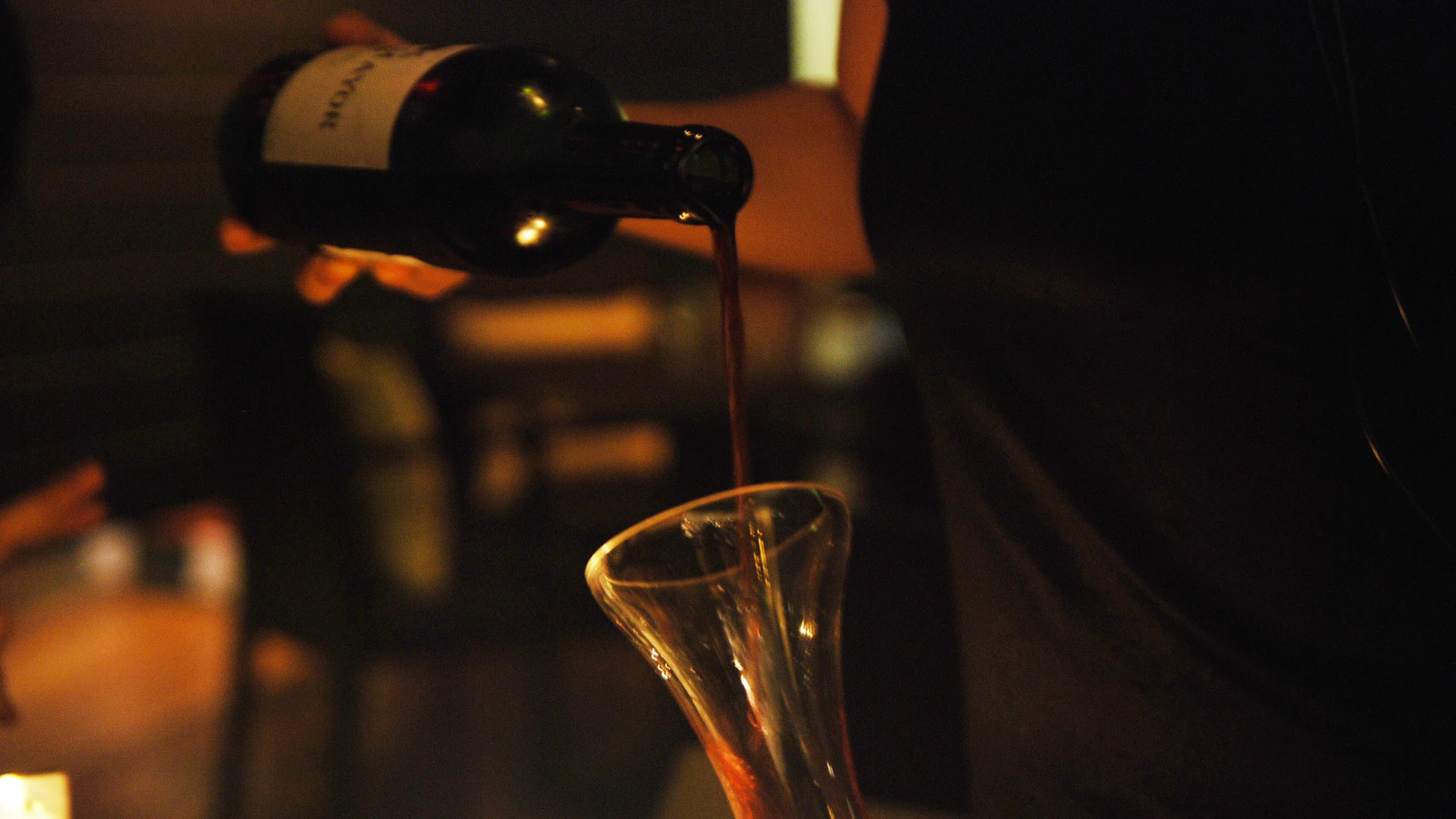
To decant a wine with sediment: stand the bottle upright for one or two days so the particles settle; open it without shaking it; pour slowly into the decanter with a candle or lamp lighting the neck; stop as soon as the sediment reaches the neck. It stays in the bottle.
In what order should you serve several wines?
Swiss Wine Valais sums up the classic order in five principles: light before heavy, white before red, dry before sweet, simple before complex, young before old. Each wine prepares the next instead of overpowering it.
With a single glass for the whole evening, these principles stop a powerful wine leaving its taste in the next one's glass.
It all fits on one scale
Just one rule to remember: the lighter a wine, the cooler you serve it. Bubbles at the coldest, full-bodied reds at room temperature — and everything else in between.
Crisp & light8-10°
Round & fruity11-13°
Supple & fruity13-15°
Powerful & structured16-18°
Fresh & festive6-10°
Sweet & indulgent8-10°
6°8°10°12°14°16°18°
Style by style
Crisp & lightDry white
Chasselas / Fendant · Petite Arvine · Johannisberg
Temperature
8-10°
Chilled
Glass
Narrow glass
Decanting
Not needed
At the meal
Aperitif / starter
Well chilled, served at the last moment — that's when it's at its liveliest.
No thermometer? 2 h in the fridge, serve straight away.
Round & fruityFull white
Chardonnay · Pinot Gris · Heida / Païen · Amigne
Temperature
11-13°
Chilled
Glass
Wider glass
Decanting
Not needed
At the meal
Starter / fish course
Chilled but not ice-cold: too cold, it loses its fruit.
No thermometer? 2 h in the fridge, take it out 10 min before serving.
Supple & fruityLight red
Gamay · Pinot Noir · Dôle · Gamaret jeune
Temperature
13-15°
Lightly chilled
Glass
Medium glass
Decanting
Optional
At the meal
Light dish / poultry
15 min in the fridge before serving: a light red loves a bit of chill.
No thermometer? 20 min in the fridge just before serving.
Light whites 8 to 10 °C, full whites 10 to 12 °C, rosés 10 to 13 °C, light reds 15 to 16 °C, full reds 16 to 18 °C.
A living room at 20 °C is too warm for red: serve a little cooler than the target.
Bucket half ice, half water: three to five minutes; otherwise the 30/30 rule.
One tulip glass is enough; fill it two or three fingers high.
Aerating opens a young red (an hour before); decanting separates an old wine from its sediment.
Serving order: light, white, dry, simple and young first.
Frequently asked questions
What temperature should white wine be served at?
8 to 10 °C for a light white such as Chasselas or Fendant, 10 to 12 °C for a full or barrel-aged white, according to Swiss Wine Valais.
Should red wine go in the fridge?
Often yes, briefly: Swiss Wine Valais recommends 30 minutes in the fridge for a wine that is too warm. Full-bodied reds are served at 16 to 18 °C, light ones such as Gamay or Pinot Noir around 15 to 16 °C.
How long should red wine be aerated?
At least an hour for a young, tannic red, according to Blick. A very old wine is poured at the last moment, as it can oxidise within minutes.
What is the difference between aerating and decanting?
Aerating gives the wine air to open its aromas. Decanting separates it from its sediment: you pour slowly, with the neck lit, until the sediment reaches the neck.