
Serve Fendant with raclette or fondue: this dry, light white, often slightly spritzy, with notes of lime blossom and ripe apple, refreshes your mouth between bites of cheese. Fendant is Chasselas from the Valais, the only canton allowed to use the name. On Helvitic you will buy it straight from the wineries; orders open soon.
Fendant, the Chasselas of the Valais
The white wine for raclette and apéritif
On this page
Fendant or Chasselas: what is the difference?
The grape is the same, only the name changes. According to Swiss Wine Promotion, the body that promotes Swiss wine, the name Fendant has been protected in the Valais since 1966 and refers only to Chasselas wines made in that canton. A Chasselas from Vaud or Geneva cannot be called Fendant.
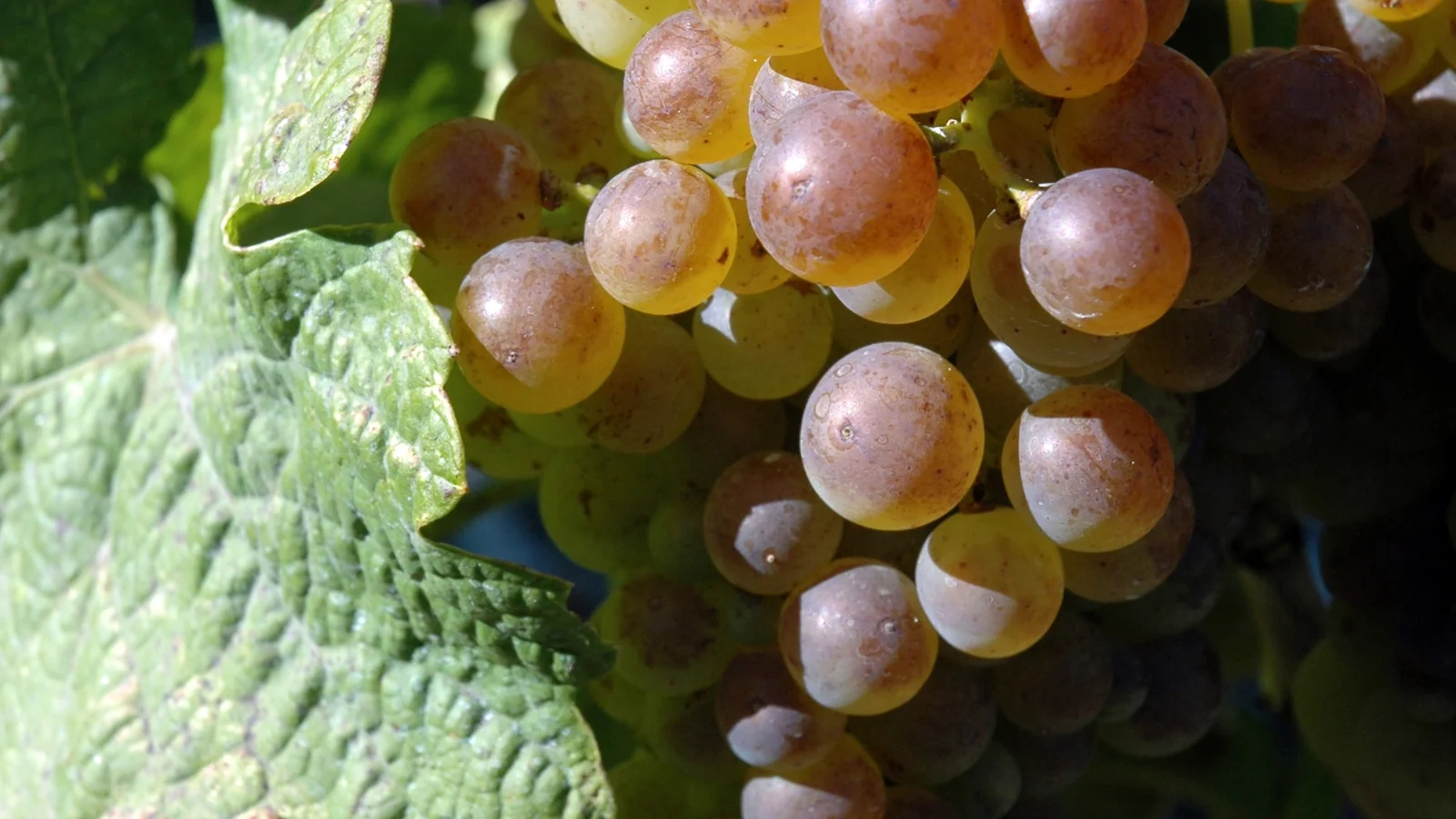
The name describes the ripe grape. Swiss Wine Valais, the Valais wine trade body, explains that Fendant berries split open when you pinch them between your fingers, instead of squirting their juice. «Fendre» means to split in French.
The story runs through Vaud: that is where the word Fendant first appears in Switzerland, in 1716. From 1848 this Vaud Chasselas was planted in the Valais, where it gradually replaced older grapes. In the 20th century Vaud dropped the name in favour of village names; the Valais kept it.
What does Fendant taste like?
Expect a dry, fresh, easy-drinking white. Swiss Wine Valais describes a floral nose of lime blossom, sometimes fruity, a mineral note of flint or hazelnut, and a palate where the fruit leans towards lemon or ripe apple.
It is often slightly spritzy: it keeps a hint of carbon dioxide that barely tingles on the tongue. That is not a fault but part of its apéritif character, which Swiss Wine Valais calls lively and airy.
The taste also changes from slope to slope, because Chasselas reflects the soil it grows in. Chamoson, Fully, Martigny, Salgesch and Sion are among the Valais villages known for their Fendant.
Why does Fendant go so well with raclette?
Because melted cheese is rich and creamy, and Fendant brings what it lacks: acidity and freshness. Swiss Wine Promotion says it of Chasselas: its gentle acidity balances the creaminess of fondue and raclette.
It also suits cheese croûte, lake fish such as trout or féra (a whitefish from Swiss lakes), poultry, and the apéritif. Our French and German articles on wines for fondue and raclette compare it with other Swiss whites.
How to serve and keep Fendant?
Serve it at 8 to 10 °C, as Swiss Wine Promotion recommends for Chasselas. Swiss Wine Valais adds that Fendant is served slightly cooler than Johannisberg or Heida, two other Valais whites.
Drink it young, within two or three years, for its freshness: that is the usual practice according to Swiss Wine Promotion. Some Chasselas vintages still age ten years or more.
Vineyard area in Switzerland
The FOAG does not count Fendant separately: the charts show Chasselas for the whole of Switzerland, and the Valais share the area Fendant can come from.
Chasselas: official 2025 figures
- Area in Switzerland
- 3,415.6 ha
- Share of the Swiss vineyard
- 23.7 %
- Rank among white grapes
- 1st of 142
Key points
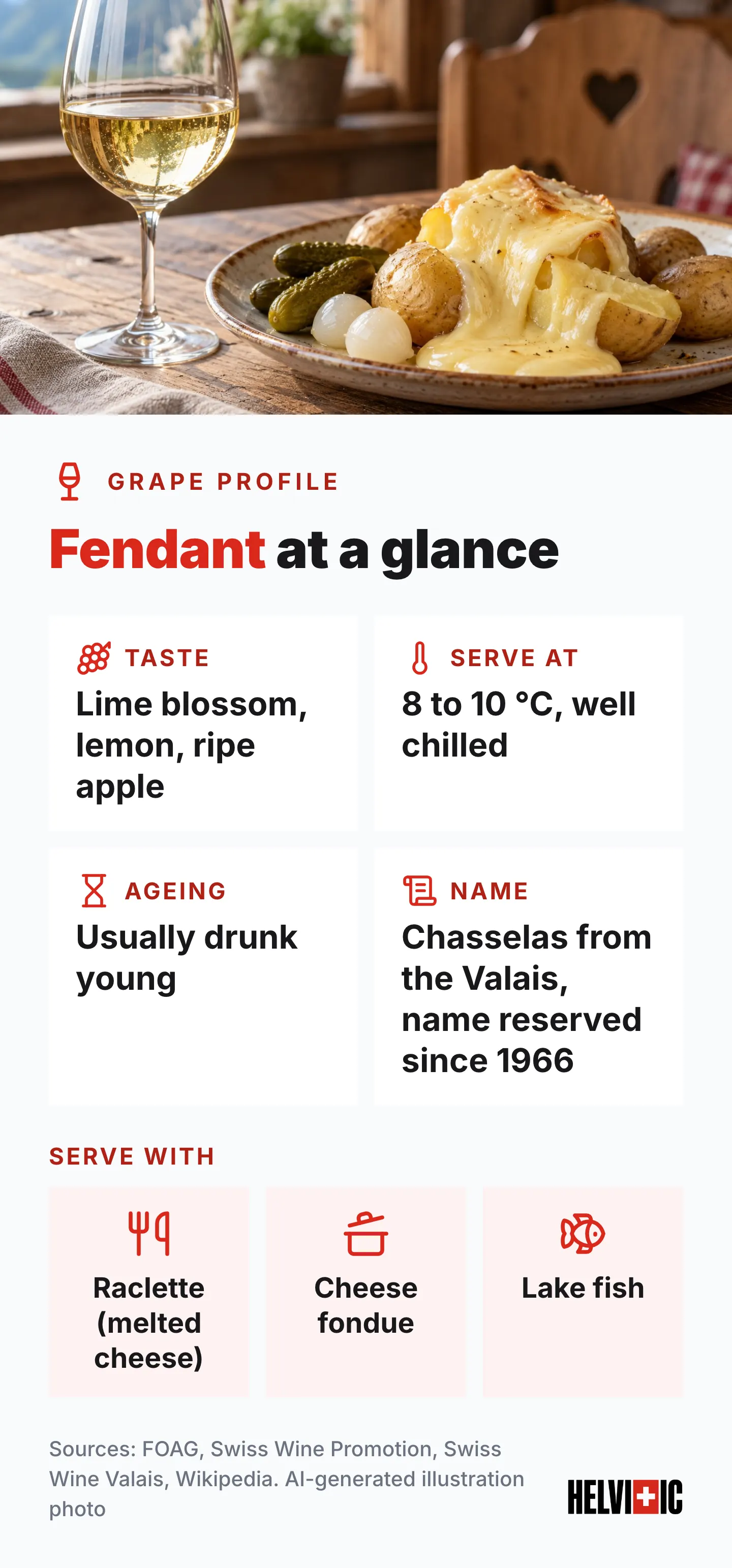
- Fendant = Chasselas from the Valais, a name reserved for the canton since 1966.
- Dry and fresh, often slightly spritzy: lime blossom, lemon, ripe apple.
- The raclette and fondue wine: its acidity balances the cheese.
- According to the FOAG, just over a fifth of Swiss Chasselas grows in the Valais.
- Serve at 8 to 10 °C, usually drunk young.
- On Helvitic, orders open soon, straight from Valais wineries.
Frequently asked questions: Fendant
What is Fendant wine?
A dry white wine from the Valais, made from the Chasselas grape. The name is reserved for Valais Chasselas; elsewhere in Switzerland the same grape makes wines called Chasselas or named after their village, such as Yvorne or Féchy.
Which grape is Fendant made from?
Chasselas only. Our Chasselas page covers the grape across French-speaking Switzerland, from Geneva to Lavaux.
Is Fendant a sparkling wine?
No. It is a still wine, though it often keeps a slight spritz, a hint of carbon dioxide you barely feel on the tongue.
Can I drink Fendant with something other than cheese?
Yes. For Chasselas, Swiss Wine Promotion suggests the apéritif, lake fish, shellfish, poultry and white meat. Its discreet taste does not cover delicate dishes.
Sources
- Federal Office for Agriculture (FOAG), «L’anno viticolo 2025», Statistiche vitivinicole, as of November 2025 (PDF)
- Swiss Wine Promotion, grape variety profile: Chasselas (Fendant protected since 1966, food pairings, serving, ageing), checked on 21 October 2026
- Swiss Wine Valais, Fendant (taste, origin of the name, slight sparkle), checked on 21 October 2026
- Swiss Wine Valais, serving temperatures, checked on 21 October 2026
- Wikipedia (French), Chasselas (cépage): Fendant in Vaud in 1716, arrival in Valais in 1848, municipalities, checked on 21 October 2026